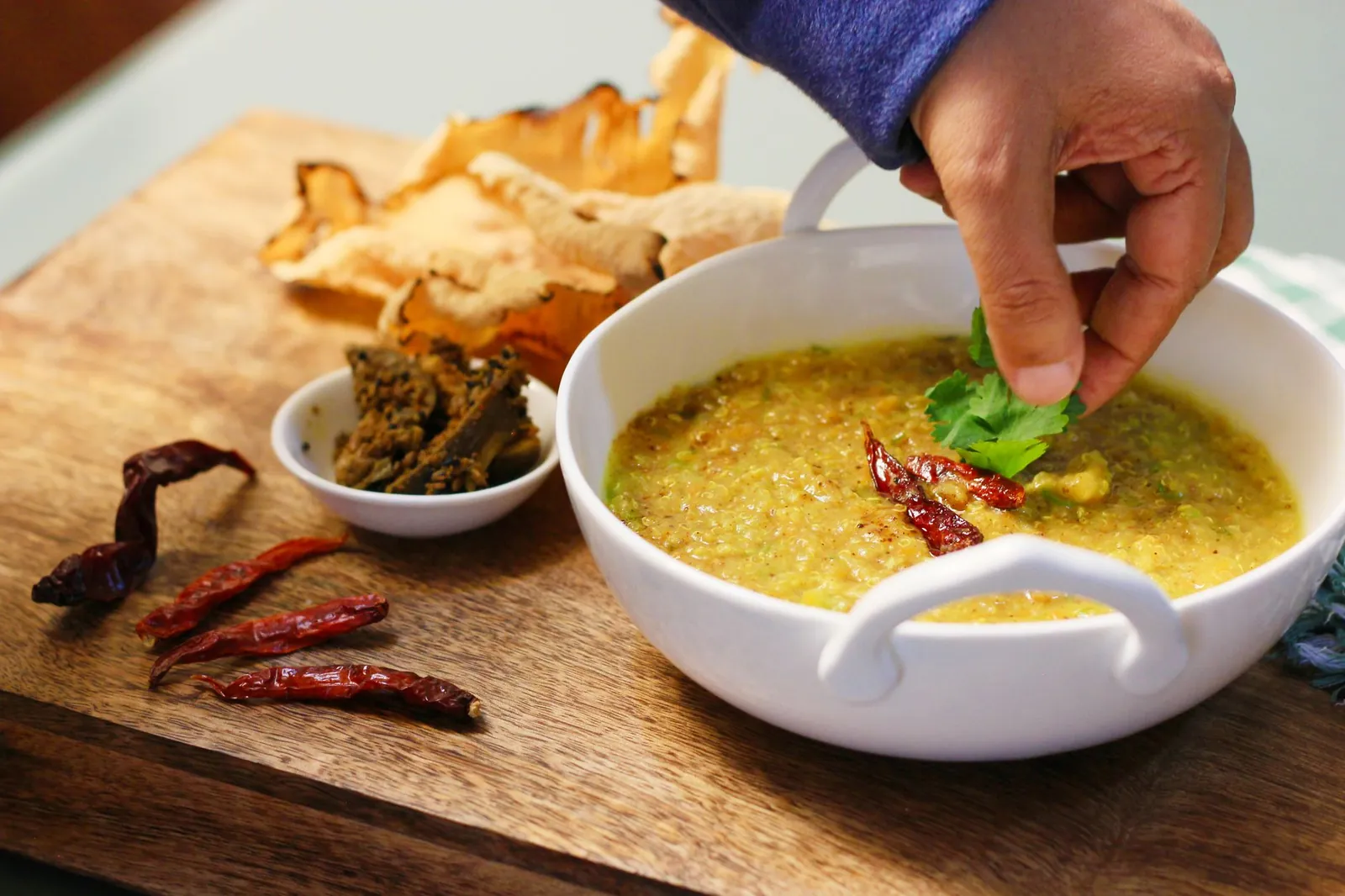
It is easy to file turmeric and ginger under curry and leave them there, as though they only belong to one kind of cooking. In practice they are far more useful than that, and the food they improve is often the plainest thing on your table. A pot of lentils, a pan of rice, a tray of roasted vegetables, a bowl of soup — these are the dishes that turn from fine to genuinely good with a little warmth stirred through them. Golden spices do not shout. Used with a light hand they add a background note of earthy warmth and a glow of colour without turning everything into a curry or overwhelming the vegetables underneath. The trick is knowing where they slot in, how much to use, and when to add them so their flavour reads round rather than raw. This guide walks through the everyday savoury foods where warm spices earn their keep, and how to fold them in without any drama.
Lentils and beans
Pulses and golden spices belong together. Lentils in particular can taste a touch dull on their own, and a little turmeric and ginger is exactly what lifts them. Start a pot of red lentils by warming oil, blooming a spoon of turmeric with some ginger and garlic, then adding the lentils and water and simmering to a soft, comforting mush. What you get is a plain dal — cheap, filling and deeply savoury — that tastes as though far more went into it than actually did. The same trick works for a pot of chickpeas or a white bean stew: a warm spice base turns them from bland to satisfying.
Rice and grains
A pinch of turmeric turns a plain pot of rice golden and gently fragrant with almost no effort. Add it, along with a little oil or butter, at the start of cooking so the colour and warmth spread through every grain. The same goes for other grains — a spiced pilaf of rice cooked with a bloomed spice base, some onion and a handful of whatever vegetables you have is a whole meal built on store-cupboard staples. Warm spices give an ordinary bowl of grains a reason to be interesting.
Roasted and pan-cooked vegetables
Vegetables take warm spices beautifully. Toss cauliflower, potatoes, carrots or squash with oil, a little turmeric and ground cumin, salt and pepper before they go in the oven, and they roast into something golden-edged and savoury. The dry heat suits the spices well; the edges catch and deepen. On the stovetop, a spoon of spice paste or a bloomed pinch of turmeric stirred into a pan of greens or a quick sauté of vegetables does the same job faster. These are the kinds of side dishes that quietly steal the meal.
Soups, eggs and simple plates
A pinch of turmeric and ginger, bloomed in the pan before the vegetables and stock go in, gives an everyday vegetable soup a warmer, rounder base. It works especially well in anything built on onions, carrots and pulses. Fresh ginger is lovely in a light broth. And beyond the obvious, a little turmeric finds its way into scrambled eggs for colour and warmth, into a pot of grains, or into the oil you fry onions in as the first step of almost anything. Once you stop treating these spices as curry-only and start reaching for them the way you reach for salt and pepper, they become part of how you cook rather than a special occasion.
A light hand, added early
Two habits make all the difference. First, use less than you think — golden spices are there to support the food, not to dominate it. Second, add them early and with a little heat, so they bloom and round out rather than tasting raw. Get those two things right and a great deal of plain, everyday savoury cooking gains a quiet warmth and a golden colour that makes it far more inviting, for the cost of a spoonful from a jar.