Some of the best cooking shortcuts are not products off a shelf but a few minutes of work you do once and lean on all week. A rough spice paste is exactly that. It is nothing more than fresh ginger, garlic and a warm golden spice mashed or blended together with a little oil into a soft, fragrant mixture — and yet a spoonful of it at the start of a dish does what a long list of separate ingredients would otherwise have to. Soups, stews, braises, a tray of vegetables, a pot of rice: all of them get a rounder, warmer, more finished flavour from a paste that took five minutes to make. You can whip it up fresh for a single meal, or make a small batch and keep it in the fridge so that half your seasoning is done before you have decided what to cook. It is humble, it is forgiving, and once you have it on hand you reach for it constantly. Here is how to make one and what to do with it.
The basic idea
At its simplest, a golden spice paste is equal-ish parts fresh ginger and garlic, a spoon of ground turmeric, and enough oil to bring it together. That is the backbone. From there you can lean it whichever way you like: more ginger for warmth and brightness, a pinch of ground cumin or coriander for depth, a little fresh chilli if you want heat, a scrap of fresh turmeric if you have it. There is no single correct recipe. The point is a soft, spoonable base that carries the flavours you cook with most.
Rough is fine. This is not a smooth restaurant purée; a slightly coarse texture is perfectly good and, some would say, better. What matters is that the aromatics are broken down enough to melt into a dish rather than sit in it as recognisable lumps.
Making it in five minutes
You have two easy routes. With a small blender or the small bowl of a food processor, drop in a good thumb of peeled ginger, four or five peeled garlic cloves, a heaped teaspoon of ground turmeric, a pinch of salt and a couple of tablespoons of a neutral oil. Blitz, scraping down once or twice, until you have a soft paste. Loosen it with a little more oil if it is too stiff to move.
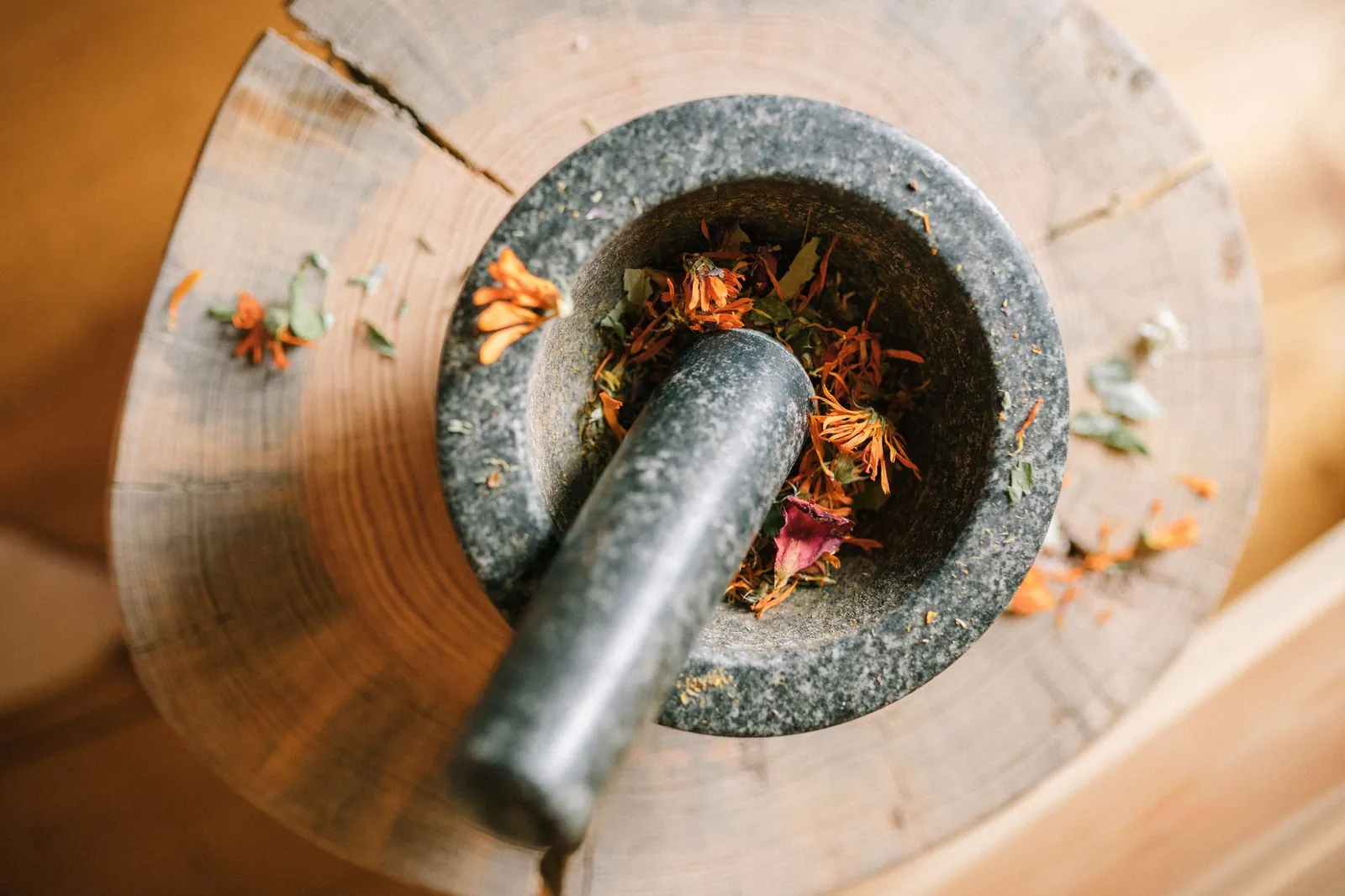
By hand, use a mortar and pestle or a board and a knife. Chop the ginger and garlic finely, add the salt — which helps them break down — and pound or mince until you have a rough pulp. Work in the turmeric and oil last. It takes a couple of minutes of arm work but needs no gadget, and the texture is honest and good.
How to use it
The main use is at the start of a dish. Warm a little oil, spoon in the paste, and let it sizzle gently for a minute or two until it smells fragrant and the raw garlic edge softens — this is blooming, the same idea covered elsewhere on this site. Then build your dish on top: add onions, then lentils and water for a dal; or tomatoes and stock for a soup; or your chopped vegetables for a braise. The paste seasons everything from the ground up.
It is just as good rubbed onto things before they cook. Smear a spoonful over vegetables or a piece of fish before roasting, toss it through cauliflower or potatoes on their way to the oven, or stir it into plain rice as it cooks. Anywhere you would otherwise reach for garlic, ginger and turmeric one by one, the paste does the same job in a single scoop.
Keeping a small batch
Make a little more than you need and store the rest in a clean jar in the fridge, with a thin film of oil over the top to keep it fresh; it will hold for several days. If you want it to last longer, spoon the paste into an ice-cube tray and freeze it, then pop the frozen cubes into a bag — a single cube dropped straight into a hot pan is a ready-made flavour base for a weeknight meal. Do label and date whatever you keep. A small habit of making paste in advance turns a great many dull, plain dinners into something warm and savoury with almost no extra thought.