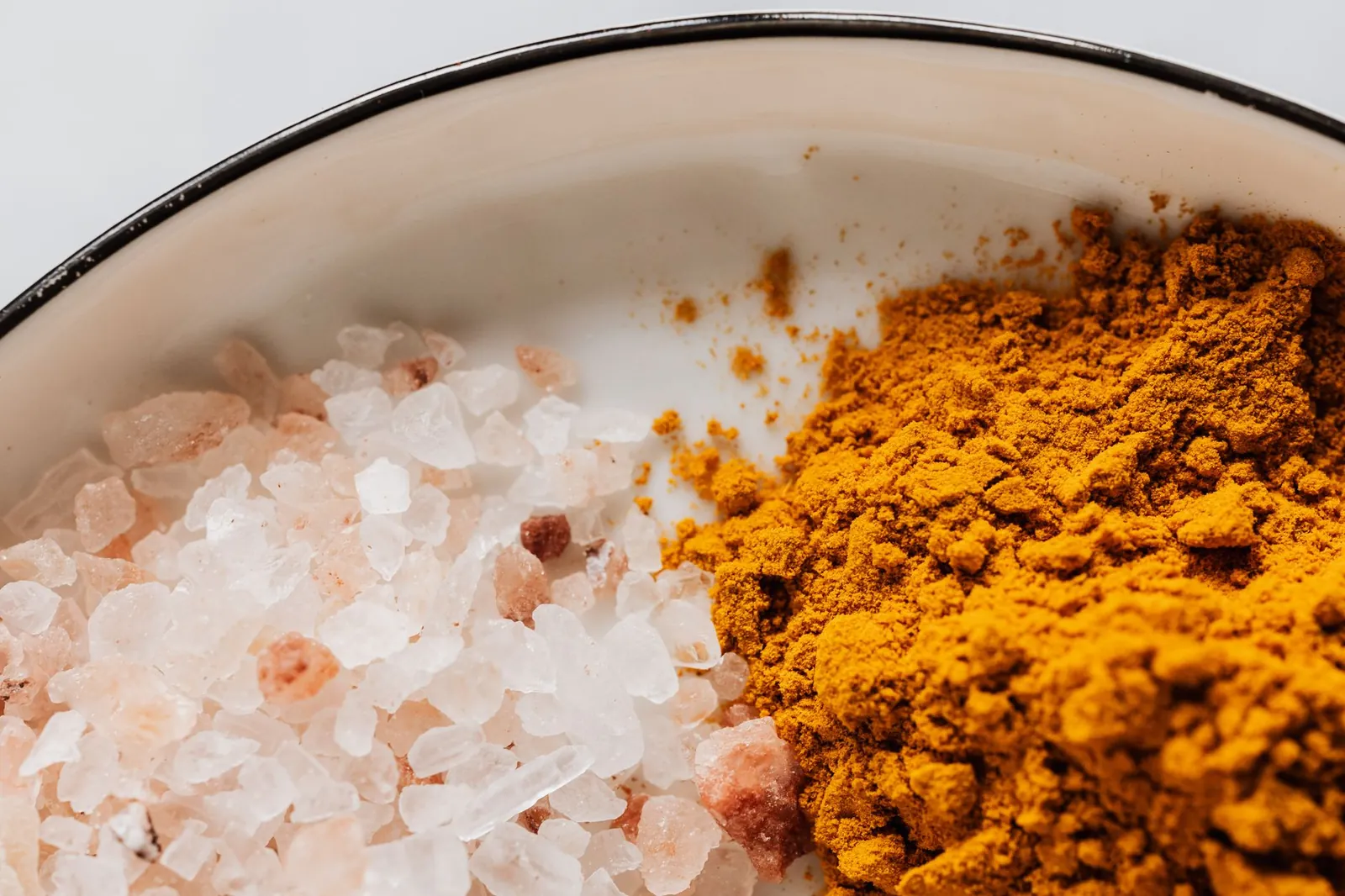
Stand in front of turmeric long enough and you notice it wears two very different faces. In the produce aisle it is a knobbly finger of root, dull brown on the outside and shockingly orange when you snap it open, staining your fingers before you have even reached the till. A few steps away, on the spice shelf, the same plant sits as a fine, even powder in a small jar — dry, mellow, endlessly convenient. Both are turmeric, and neither is simply better than the other. They taste a little different, they behave differently in the pan, and they suit different kinds of cooking. Deciding which to keep is less a question of quality than of how you actually cook: how often, how much fuss you enjoy, and what you want the spice to do. This guide walks through what each one gives you, where each falls short, and how to keep one or both without waste.
What the fresh root brings
Fresh turmeric tastes brighter and more alive than the powder. There is a faint citrus edge to it, a slight peppery heat, and a green, almost raw quality that dried turmeric loses. Grated into a dressing or a warm drink, it reads clean and lively rather than earthy. It is at its best where that freshness can be tasted — in a quick pickle, grated raw over a salad, simmered gently in a broth, or blended into a paste with ginger and garlic.
The colour is also more vivid. A little grated fresh root turns a pot of rice or a pan of vegetables a glowing, almost fluorescent yellow. And because it comes in a whole piece, you control exactly how much you use and how coarse it is. The trade-off is real, though: it stains everything it touches, it needs peeling and grating, and it does not keep for long. A root left in the fruit bowl will soften and go musty within a couple of weeks.
Where ground turmeric wins
Ground turmeric is the workhorse. It is already dry, even and ready, so you can shake a measured amount straight into a pan without a board, a grater or orange fingertips. Its flavour is rounder and warmer than the fresh root — less bright, more earthy and slightly bitter — which is exactly what you want stirred into a lentil pot, a spice blend, or a tray of roasting vegetables. Because the flavour is more muted, it blends into a dish rather than standing out, which is why almost every packaged curry powder leans on the ground form.
Convenience is the whole point. A jar lives in the cupboard for months, asks nothing of you, and is there the moment you want it. For most everyday cooking — a quick dal, a spiced rice, a marinade — ground turmeric is not a compromise but the obvious choice.
Colour, and a word on staining
Both forms stain, and fresh stains harder because it is wet and concentrated. Wooden boards, plastic spoons, pale worktops and light clothing all soak up turmeric's yellow readily. It is not a reason to avoid the spice — just a reason to reach for a board you do not mind marking, to wipe up splashes before they dry, and to keep it off your best linen. There is a whole short guide on this site about living with turmeric's colour without turning your kitchen yellow.
So which should you buy?
For most people, most of the time, a jar of ground turmeric is the sensible thing to keep. It covers the daily cooking — the lentils, the rice, the roasted things — with no effort and no waste. If you cook these foods often, buy a small jar and finish it while it is still bright rather than letting a big one fade.
Fresh turmeric is worth buying when you have a specific use in mind: a batch of paste, a pickle, a pot of gently simmered broth, or a warm drink where you want that clean, lively edge. Because it does not keep, buy it for a purpose rather than on spec. Many cooks land on a simple arrangement — the jar always in the cupboard, a root bought now and then when a recipe really rewards it. You do not have to choose one camp forever; you just have to match the form to the dish in front of you.
A simple starting point
If you are only going to keep one, keep the ground. Buy a small jar, store it somewhere dark and dry, and use it freely in everyday savoury cooking. Once you are comfortable with how turmeric behaves — how little you need, how it colours a dish, how it likes a moment of warmth before the liquid goes in — pick up a fresh root and taste the difference for yourself. That side-by-side is the fastest way to understand a spice that quietly improves a great deal of ordinary food.