The first time you cook with turmeric in earnest, you learn something the recipe forgot to mention: it stains, cheerfully and thoroughly. The board turns yellow, the wooden spoon takes on a permanent tan, your fingertips look faintly jaundiced, and a splash on a white shirt is a small tragedy. This is not a fault to be fixed so much as a habit of the spice to be managed. The very thing that makes turmeric wonderful — its deep, saturated colour — is what makes it cling to porous surfaces and pale fabric. The good news is that most staining is easy to avoid with a little forethought, and most of the marks that do land will fade or lift with the right approach. None of it is a reason to keep turmeric off your shelf. It just pays to know, before you open the jar, where the colour likes to go and how to keep it in the pan where it belongs. Here is the plain version.
Where the colour lands
Turmeric stains porous, absorbent things most: bare wood, plastic, unglazed surfaces, grout, and light or natural fabrics. Fresh turmeric root stains harder than the powder because it is wet and concentrated, but both leave their mark. Non-porous materials fare far better — glass, glazed ceramic, stainless steel and stone wipe clean easily, because the colour sits on the surface rather than soaking in. Knowing this shapes every sensible precaution: keep turmeric away from the absorbent stuff, and steer it towards the surfaces that shrug it off.
Preventing stains before they happen
Prevention is nine-tenths of the job. Reach for a board you do not mind marking — a scruffy plastic one or a dedicated older wooden board — rather than your best chopping surface. Use a metal or glass bowl instead of plastic for mixing anything with turmeric in it. Wipe up splashes on the worktop straight away, while they are still wet, before they have a chance to dry and set. And keep the powder well away from anything you are wearing that you care about; an apron is not a fashion statement here, it is armour.
Your hands are the easy win. If you are grating fresh turmeric or handling a lot of the powder and would rather not go yellow, wear a pair of thin kitchen gloves. If you would rather not bother, know that the stain on skin is harmless and temporary — it wears off your hands within a day or so of normal washing.
Shifting stains that stick
When a stain does set, a couple of ordinary approaches help. On worktops, boards and plastic, a paste of baking soda and a little water, gently scrubbed and left for a few minutes, will often lift a good deal of the colour. Dish soap and warm water with a bit of elbow grease does more than you would expect. Turmeric's colour also breaks down in sunlight, which is why a stained plastic container left on a bright windowsill for a day or two frequently fades on its own — a genuinely useful and effortless trick.
For fabric, deal with it fast. Rinse the stain under cold running water from the back of the cloth to push the colour out rather than through, then treat it with a little dish soap or a stain remover before washing as usual. Avoid drying a stained item in a hot dryer until you are sure the mark is gone, because heat can set what is left. As with everything here, a quick response beats a heroic rescue later.
Cleaning as you cook
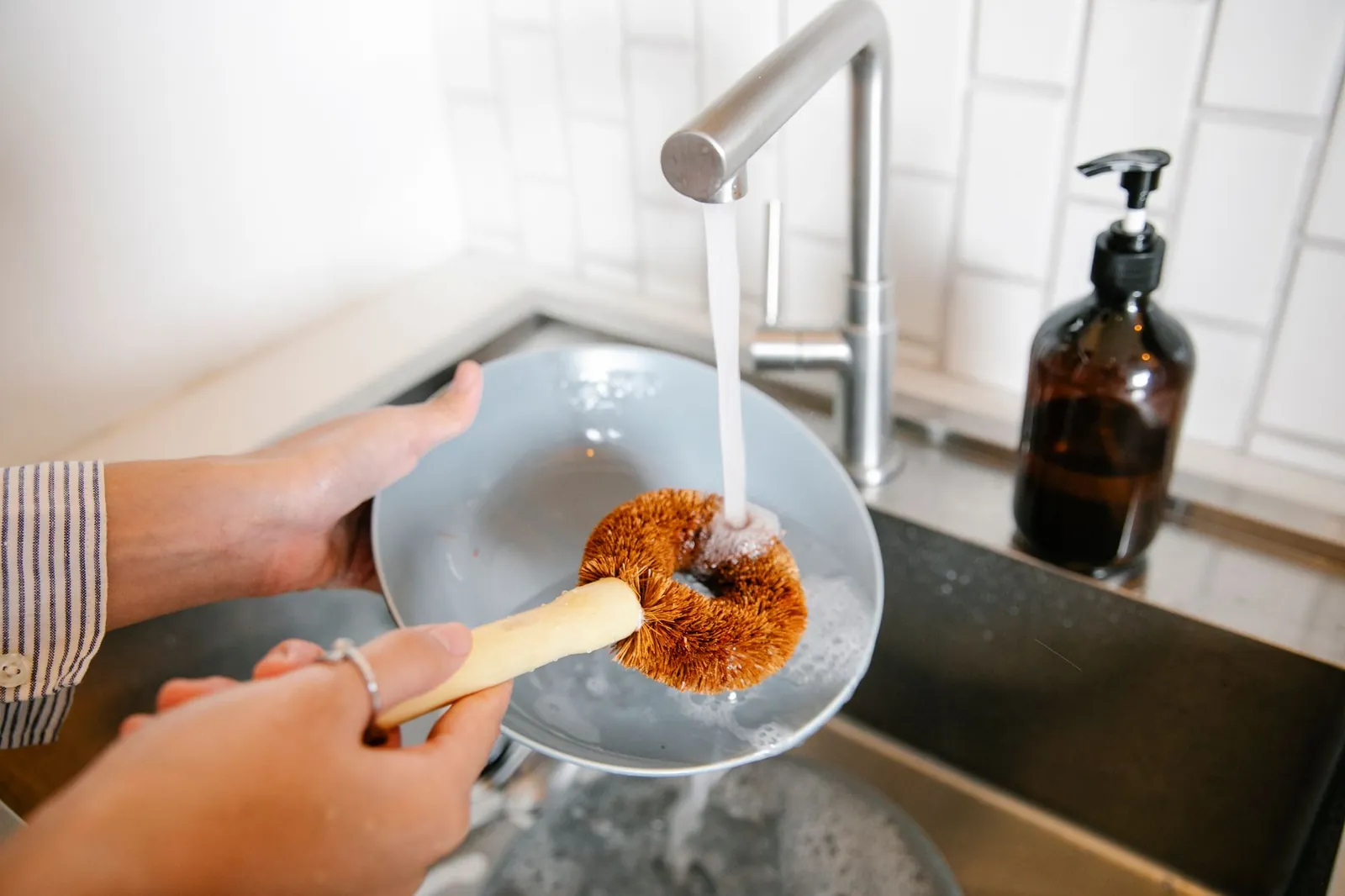
The tidiest kitchens keep turmeric under control simply by cleaning as they go. Rinse a turmeric-y bowl or spoon soon after use rather than letting it sit and dry. Give the board a wash before the colour has time to soak in. Keep that cloth within reach for worktop splashes. None of this is difficult; it just has to happen promptly. Do it as a matter of course and turmeric stops being the messy spice and becomes simply another jar on the shelf — one whose colour stays firmly in the food, where you wanted it all along.