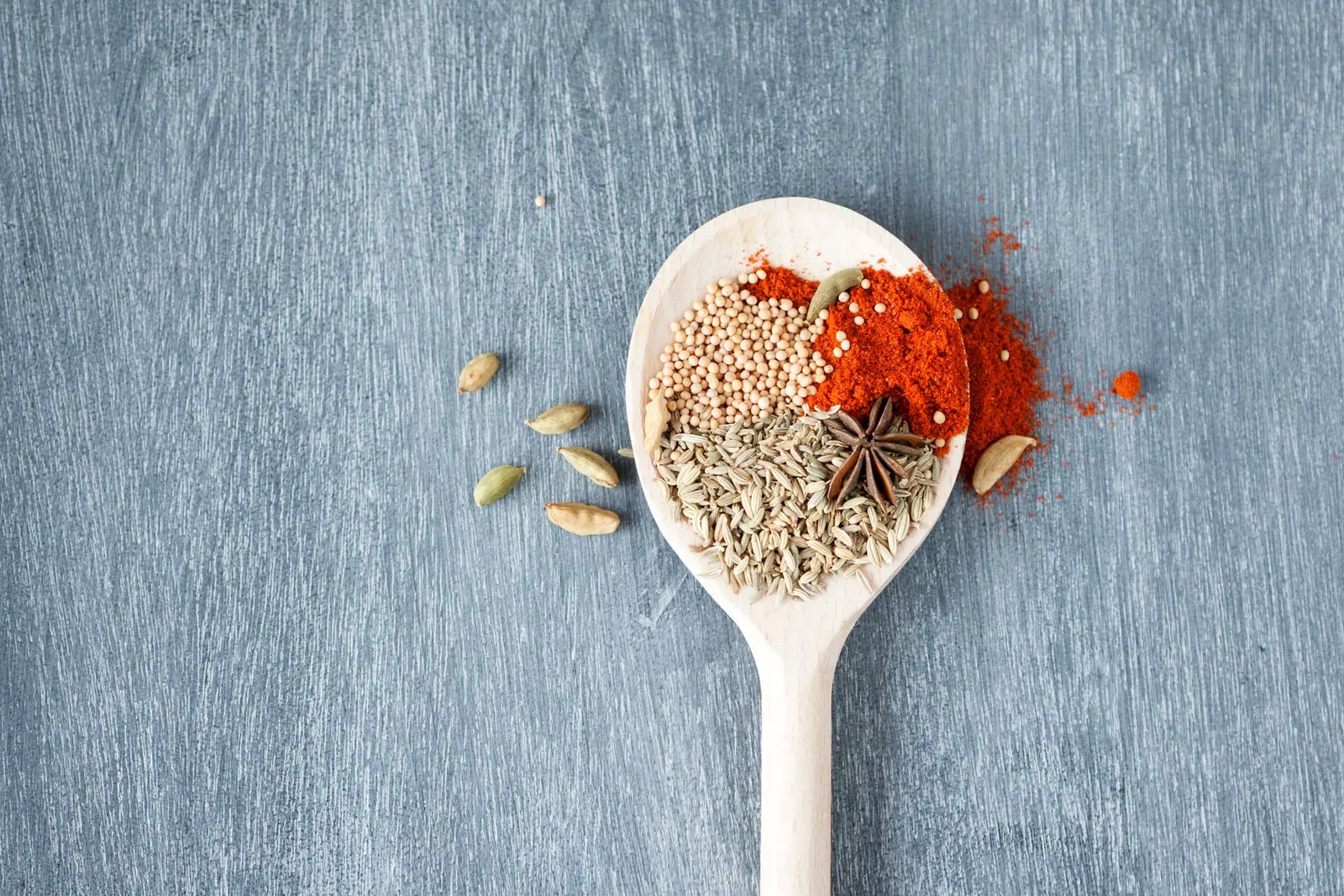
There is a small step that separates cooking that tastes flat from cooking that tastes finished, and it happens in the first minute, before most of the ingredients are even in the pan. Cooks call it blooming: giving ground spices a short moment in warm fat or a dry pan so their flavour opens up. Stir raw turmeric straight into a watery pot and it can taste dusty, a little bitter, slightly muddy. Warm that same spoonful in oil for half a minute first and it turns fragrant, rounded and deep, and the whole dish tastes as though it simmered far longer than it did. It is one of those habits that costs nothing and quietly lifts everything. Once you have done it a few times it becomes automatic — the pan goes on, the fat goes in, the spices go in next, and only then does the cooking properly begin. This guide explains what blooming does and how to do it without burning anything.
What blooming actually does
Ground spices like turmeric and ginger carry a lot of their flavour and aroma in oil-loving compounds. Cold and dry in the jar, those compounds sit locked in the powder and read as dull. A little heat, especially in the company of fat, loosens them and lets them spread into the oil, which then carries that flavour through the whole dish. That is why a dal built on bloomed spices tastes seasoned all the way through, while one where the turmeric was thrown into the water at the end tastes thin and slightly raw.
Heat also mellows the harsher, bitter edge that raw ground turmeric can have. Thirty seconds in warm oil is enough to soften it into something warm and earthy. You are not cooking the spice for long; you are just waking it up.
Blooming in oil, step by step
This is the most common way and the easiest to control. Warm a little oil or butter in a pan over medium heat — enough to coat the base. When it shimmers but is not smoking, add your ground spices and any aromatics like onion, garlic or ginger. Stir more or less constantly. Within twenty to forty seconds the kitchen will smell noticeably more fragrant, and the turmeric will look glossy where it meets the oil. That is your signal to move on: add the onions, the liquid, the lentils, whatever comes next. The bloomed oil now carries the flavour into the dish.
Keep the heat moderate. Ground spices are fine particles, so they scorch fast — much faster than whole seeds. If the pan is too hot they can turn bitter in seconds. When in doubt, drop the heat and go slower.
Toasting whole spices in a dry pan
Whole spices — cumin, coriander, mustard and fennel seeds among them — like a slightly different treatment. Put them in a dry pan over medium heat with no oil and shake or stir them. In a minute or two they darken a shade, turn fragrant, and some will pop or crackle. That is toasting, and it deepens their flavour before you grind them or add them whole. Turmeric and dried ginger are almost always sold ground, so for those the oil method is the usual route; save dry toasting for the seeds.
Common mistakes
The usual slip is heat that is too high. A ripping-hot pan burns fine powders before you can react. The second is walking away — blooming is a stand-and-stir job, thirty seconds of attention, not something to leave while you chop. The third is adding spices to a completely dry, empty hot pan and expecting the oil version's result; ground spices really do want a film of fat to bloom into, or a genuinely dry-toast approach for whole seeds. Get the fat and the heat right and the rest looks after itself.
Making it a habit
The easiest way to lock this in is to change the order you cook in. Instead of building a dish and seasoning it at the end, start with the fat, bloom the ground spices and aromatics first, and build everything on top of that fragrant base. Do it for a few weeks and it stops being a technique you remember and becomes simply how you start cooking. The food tastes rounder and more complete for it, and you will have spent all of an extra minute at the stove.